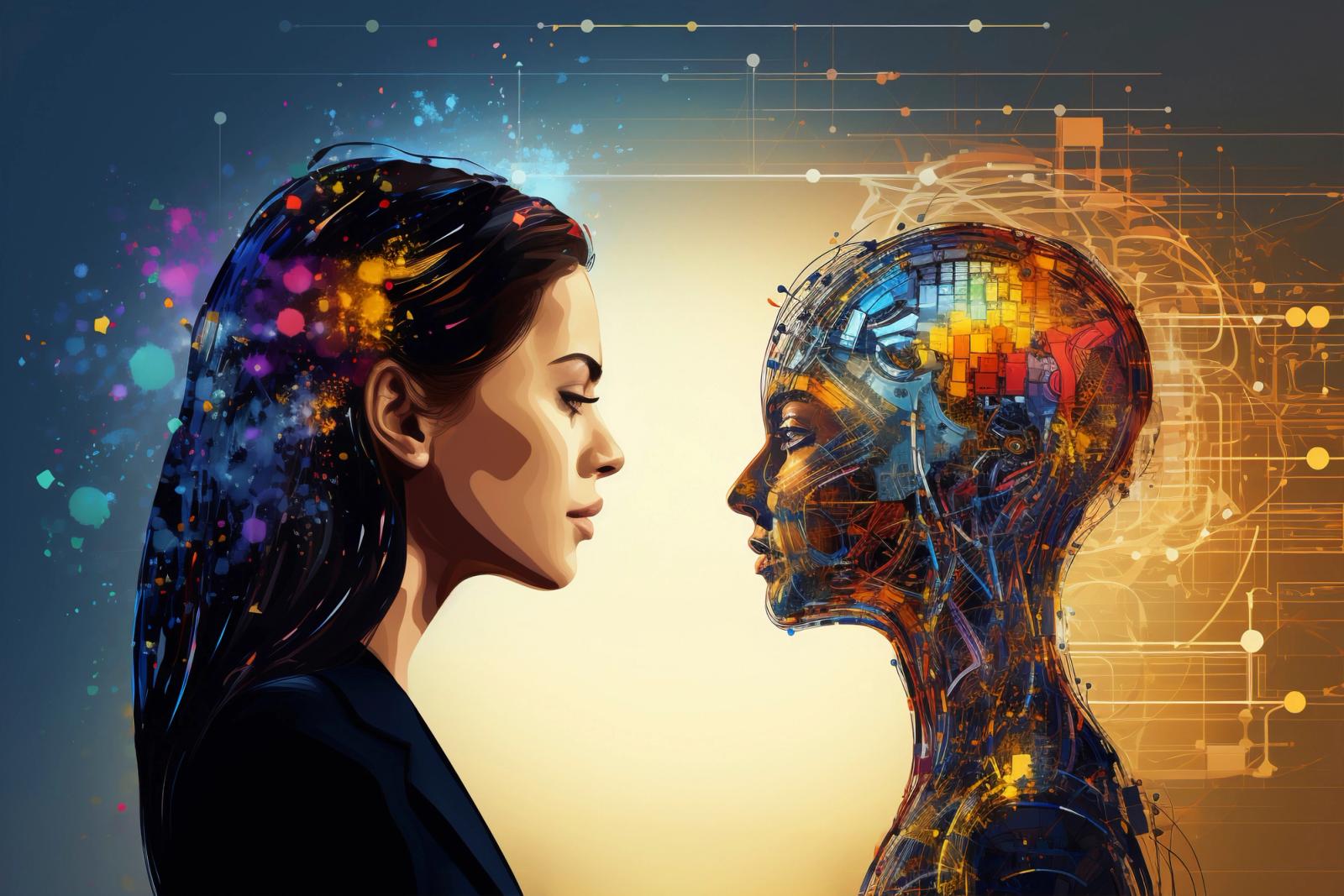
Artificial intelligence has made remarkable progress in recent years, especially in areas once considered uniquely human—writing, design, music, and even software development. As these capabilities continue to improve, a fundamental question arises: can AI truly replace human creativity?
The answer is more complex than it appears.
Understanding Creativity
Creativity is not just about producing output—it involves emotion, experience, context, and intent. Human creativity is shaped by personal history, cultural influence, and the ability to interpret meaning.
While AI can generate content that appears creative, it does so based on patterns learned from existing data. It does not possess true understanding or lived experience.
This distinction is critical.
What AI Does Well
AI excels at:
- Generating variations of existing ideas
- Combining patterns in new ways
- Producing content at scale
In many cases, AI can produce results faster than humans, especially for structured or repetitive creative tasks.
For example, AI can:
- Generate design mockups
- Suggest code structures
- Produce written content drafts
These capabilities make AI a powerful tool in creative workflows.
Where AI Falls Short
Despite its strengths, AI has limitations when it comes to originality and intent.
AI does not:
- Experience emotions
- Understand meaning in a human sense
- Create from genuine inspiration
It operates within the boundaries of the data it has been trained on. This means it cannot truly originate ideas in the same way humans can.
The Rise of Human-AI Collaboration
Rather than replacing creativity, AI is transforming how creativity is expressed.
The most effective approach is not competition, but collaboration.
In this model:
- AI handles speed, generation, and iteration
- Humans provide direction, taste, and meaning
This allows creators to move faster while maintaining control over the final output.
A Shift in Creative Roles
As AI tools become more advanced, the role of creators is evolving.
Instead of focusing solely on execution, creators are increasingly:
- Curating ideas
- Refining outputs
- Guiding creative direction
This shift emphasizes strategic thinking over manual production.
The Future of Creativity
Artificial intelligence will continue to influence creative industries, but it is unlikely to fully replace human creativity.
Instead, it will:
- Expand creative possibilities
- Lower barriers to entry
- Enable new forms of expression
The future belongs to those who can effectively combine human insight with AI capabilities.
Conclusion
AI is not the end of human creativity—it is a new chapter in its evolution.
While machines can generate content, true creativity still requires human perspective, intention, and meaning. The real opportunity lies in using AI as a tool to enhance, not replace, what makes creativity uniquely human.